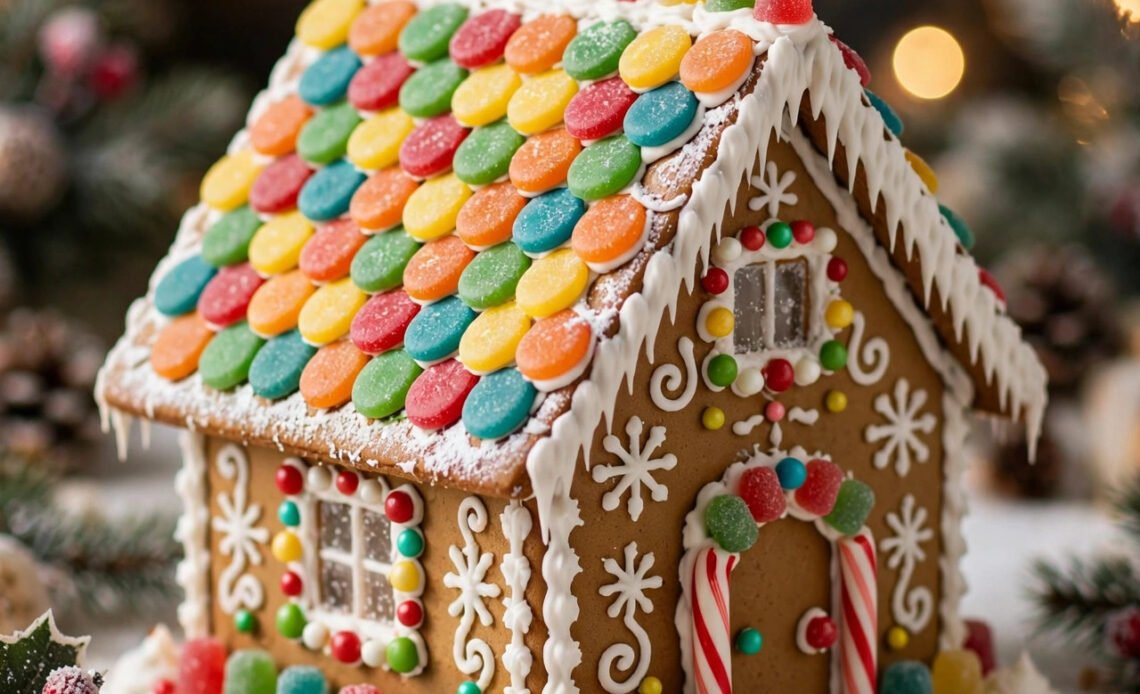
Want a gingerbread house that looks like it came straight from a Christmas movie?
There’s something magical about a gingerbread house glowing on the kitchen table in December. The spiced smell, the candy colors, the lopsided chimney your kid insists is “supposed to look like that” — it’s the centerpiece of the whole season. But building one that actually stands up (and tastes amazing) takes more than a wobbly kit box.
These gingerbread house ideas start with a rock-solid, deeply spiced gingerbread recipe and a royal icing strong enough to glue anything. From classic candy cottages to modern minimalist designs, each idea below gives you the dough, the “mortar,” and the decorating tricks to pull it off. Pick your style, bake, assemble, and get decorating.
1. The Classic Candy Cottage

The iconic gingerbread house: gumdrop shingles, peppermint windows, a candy-cane fence, and a snowy royal-icing roof. This is the one your childhood remembers, and the techniques here — thick icing glue, candy sorted by color — carry through every idea on this list.
2. Sturdy Spiced Gingerbread Dough

The foundation of every great house. Molasses, dark brown sugar, and a heavy hand with ginger, cinnamon, and cloves make walls that bake flat and stay crisp for weeks. Roll to exactly 1/4 inch, chill the cut pieces before baking, and your walls come out straight instead of bowed.
3. Royal Icing Glue

Forget frosting from a tub — royal icing made with meringue powder sets like cement. Pipe it thick, hold each wall for two minutes, and let the structure cure for at least 8 hours before decorating. This is the difference between a house that stands and a house that slumps.
4. White Christmas Minimalist House

All-white icing, gold dragees, and a dusting of powdered sugar “snow.” The minimalist gingerbread house looks like Scandinavian design in cookie form and photographs beautifully. Fewer candies, more impact.
5. Gingerbread House Kit Upgrade

Bought a kit? Don’t use the included icing — it’s the number one cause of collapsing houses. Toss it, make real royal icing, and the same pre-baked pieces will stand tall. Add your own candy stash and nobody will ever know it started in a box.
6. The A-Frame Cabin
Two big triangles and two end walls make the easiest structural house there is. The steep A-frame roof sheds “snow” (powdered sugar) beautifully, and the shape is nearly impossible to collapse. Decorate with pretzel log siding for a cozy cabin vibe.
7. Victorian Gingerbread Mansion
Multiple gables, a wraparound candy porch, and lace-piped trim piped with a fine round tip. This is a weekend project, but the result looks like a dollhouse. Build in stages — assemble one section per day so each joint cures fully.
8. Church with a Candy Steeple
A tall steeple made from a sugar cone wrapped in icing and candy turns a simple house into a little church. Add arched gumdrop windows and a pretzel cross. It makes a stunning mantel centerpiece.
9. Gingerbread Barn with Animal Crackers
Red-tinted icing “barn boards,” a white icing X on the doors, and animal crackers grazing in a coconut-grass yard. Kids love this one, and it’s forgiving — barns are supposed to look rustic.
10. Haunted Winter Ruins
Deliberately crooked walls, broken candy-glass windows, and dark chocolate “charred” beams make a delightfully spooky winter ruin. A fun twist for a Christmas party with a gothic edge.
11. Cookie-Cutter Village
Skip the big house: bake a whole village of tiny houses from one sheet of dough. Small houses need no internal support, assemble in minutes, and make adorable place cards when you pipe each guest’s name on a roof.
12. The Pretzel Log Cabin
Stack pretzel rods like logs with icing mortar between them for walls that look hand-built. The pretzel texture reads as wood at a glance, and the whole cabin smells incredible. Top with a shingled graham cracker roof.
13. Icing Icicle Roofline
Pipe long, drippy icicles along every eave using a round tip and slightly thinned royal icing. Let gravity do the work — pipe, pause, let it drip. It instantly makes any house look frosty and professional.
14. Stained-Glass Candy Windows
Crush hard candies (the clear ones) and bake them in the window cutouts for the last 5 minutes of baking. They melt into translucent jewel windows that glow when you put a battery tea light inside the house.
15. Chocolate Gingerbread Chalet
Swap a quarter of the flour for dark cocoa and you get a deep brown chalet that looks like dark wood. Decorate with white chocolate “snow” and silver dragees — the contrast is striking, and the flavor is rich and not too sweet.
16. The Candy Garden Path
A house is only half the project — the yard sells it. Lay a path of candy-coated chocolates, border it with candy-cane lampposts, and scatter shredded coconut snow with gumdrop bushes. Give the base board the full treatment.
17. Marshmallow Snowman Guards
Three stacked marshmallows, pretzel arms, and a candy corn nose make snowmen that stand guard by the front door. Kids can build these while the walls cure — instant, no-bake fun.
18. Edible Glitter Snowfall
A light brush of edible glitter over the whole roof catches the Christmas lights and makes the house shimmer. Use a soft pastry brush and go lightly — a little goes a long way.
19. The Workshop with Santa’s Sleigh
Build a low workshop annex and park a candy-cane sleigh (two canes, a chocolate bar seat) out front. Tiny wrapped “presents” from sugar cubes finish the North Pole scene.
20. No-Bake Graham Cracker House
For the youngest decorators: graham crackers, store-bought frosting, and a milk carton as the inner frame. It won’t win architecture awards, but toddlers can decorate it solo with zero frustration.
21. Piped Lace Curtains
Pipe delicate lace patterns across windows with a #1 or #2 round tip. It looks impossibly fancy but it’s just steady piping — practice on parchment first. The effect on a white-iced house is pure elegance.
22. The Tree Farm Stand
A tiny lean-to selling Christmas trees: green candy-melts piped into tree shapes on parchment, stuck upright in icing “snow.” Add a striped awning made from fruit-striped gum. Irresistibly cute.
23. Gingerbread Skyscraper
For the architecturally ambitious: a tall, narrow tower with lit candy windows on every floor. Use internal dowels or pretzel rods for support. It dominates any dessert table.
24. Make-Ahead & Storage Strategy
Bake walls up to two weeks ahead and store airtight — they only get sturdier. Assemble the weekend before Christmas, decorate mid-week, and display through New Year. Keep the finished house away from humidity and direct sun.
25. The Leftover-Dough Cookie Platter
Every house leaves scraps. Roll them into spiced gingerbread people, stars, and trees to serve alongside the house. Same dough, zero waste, and guests get something to actually eat without dismantling your masterpiece.
Tips for the Best Gingerbread Houses
Roll evenly, always. Uneven walls mean crooked houses. Use rolling-pin guides or two stacked rulers to keep every piece at a true 1/4 inch.
Chill cut pieces before baking. Fifteen minutes in the fridge stops spreading, so your walls keep their crisp edges and fit together cleanly.
Let joints cure overnight. Royal icing feels dry in an hour but needs 8-12 hours for full strength. Assemble one evening, decorate the next.
Sort candy before you start. Dump everything into bowls by color and size. Decorating goes twice as fast when you’re not hunting for the right gumdrop.
Work from the roof down. Decorate roof panels before attaching them when you can — it’s far easier than piping overhead on an assembled house.
FAQs
How far in advance can I bake gingerbread house pieces?
Bake walls up to two weeks ahead. Store them flat in an airtight container at room temperature and they stay crisp — in fact, slightly stale pieces are sturdier for building.
Why does my gingerbread house keep collapsing?
The usual culprits: weak icing (use real royal icing with meringue powder, not tub frosting), decorating before the structure cures (wait 8-12 hours), or walls that spread during baking (chill cut pieces first and roll evenly).
Can you actually eat a gingerbread house?
Yes, if you built it from food-safe ingredients. Most display houses get dusty after weeks on the table, so many families build one to admire and bake a separate batch of cookies for eating.
What’s the best glue for a gingerbread house?
Thick royal icing made with meringue powder. It dries hard and bonds like cement. Melted white chocolate works in a pinch, but royal icing is stronger and easier to pipe.
How do I keep gingerbread walls from spreading?
Chill the cut dough for 15 minutes before baking, don’t over-grease the pan (parchment is enough), and measure flour accurately — too-soft dough spreads, properly firm dough holds its shape.
Do I need a template for a gingerbread house?
Templates help a lot. Draw your wall shapes on cardstock, cut them out, and trace onto the dough with a knife. Keep the template — you’ll reuse it every year.
Final Thoughts
A gingerbread house is never really about perfection — it’s about the afternoon you spend building it, the kitchen smelling like spice, and the ridiculous candy choices everyone defends to the end. Start with sturdy dough and real royal icing, give the structure time to cure, and then let the decorating get as wild as you want. Your Christmas table deserves a showstopper this year. Happy building!